


World Stroke Day is October 29. The World Stroke Organization describes the day as an opportunity to raise awareness about stroke, prevention, treatment, and support for survivors. World Stroke Organization
When someone has a stroke, much of the immediate attention understandably goes toward survival and medical stabilization.
But then comes the next question:
“What happens now?”
That’s where rehabilitation becomes so important.
Stroke Can Change More Than Movement
Many people associate stroke primarily with weakness or paralysis.
But stroke can affect:
- Speech
- Language
- Memory
- Attention
- Problem solving
- Swallowing
- Voice
- Reading
- Writing
- Emotional regulation
- Vision
- Daily living skills
And sometimes the challenges aren’t obvious to other people.
Someone may be able to walk into a room but have difficulty remembering why they’re there.
They may know what they want to say but struggle to find the words.
They may understand a conversation but become exhausted trying to keep up.
They may physically be able to cook but have difficulty sequencing all of the steps.
This Is Where Our Team Comes In
Stroke rehabilitation can involve multiple disciplines working toward the same goal: helping someone participate in life again.
Speech-Language Pathology
Our SLPs may address:
- Aphasia
- Speech
- Cognitive-communication
- Voice
- Memory
- Attention
- Problem solving
- Swallowing
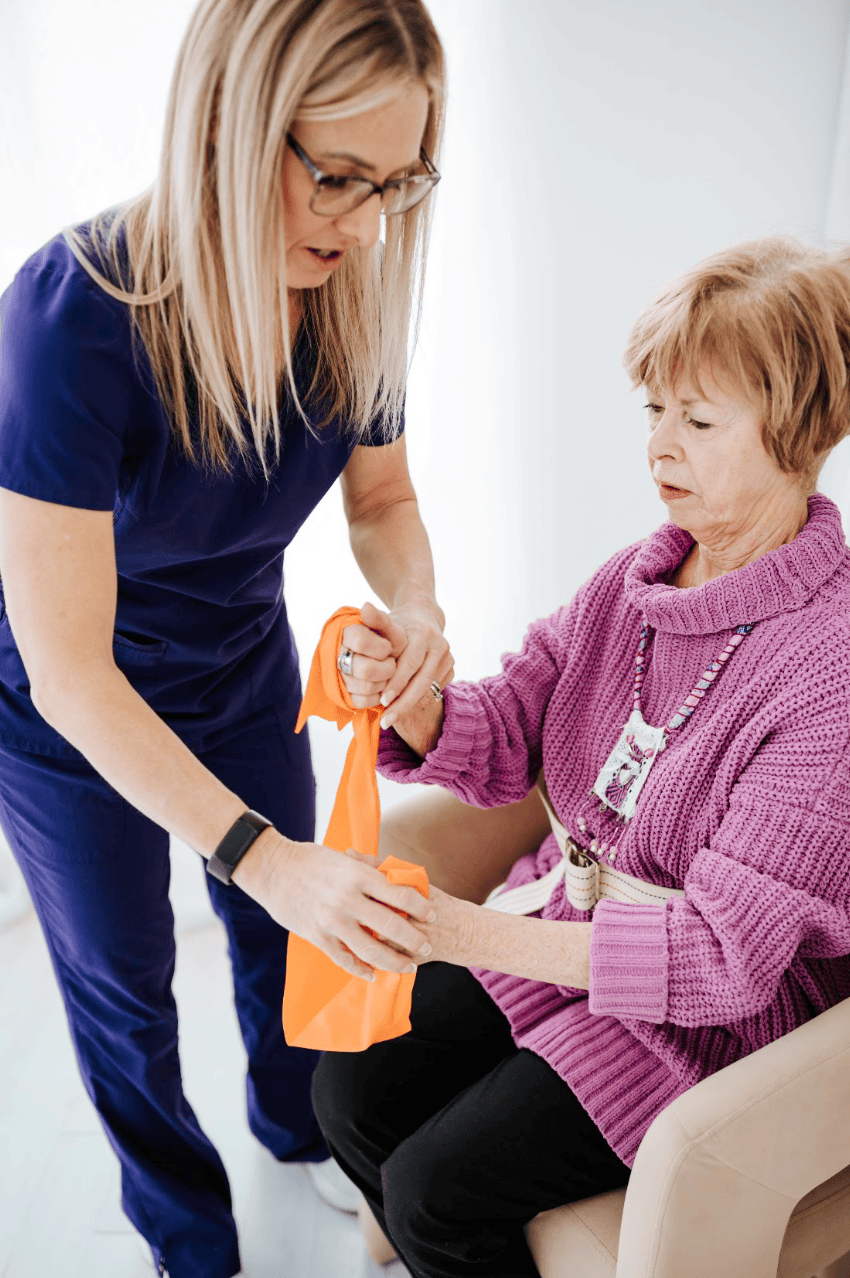
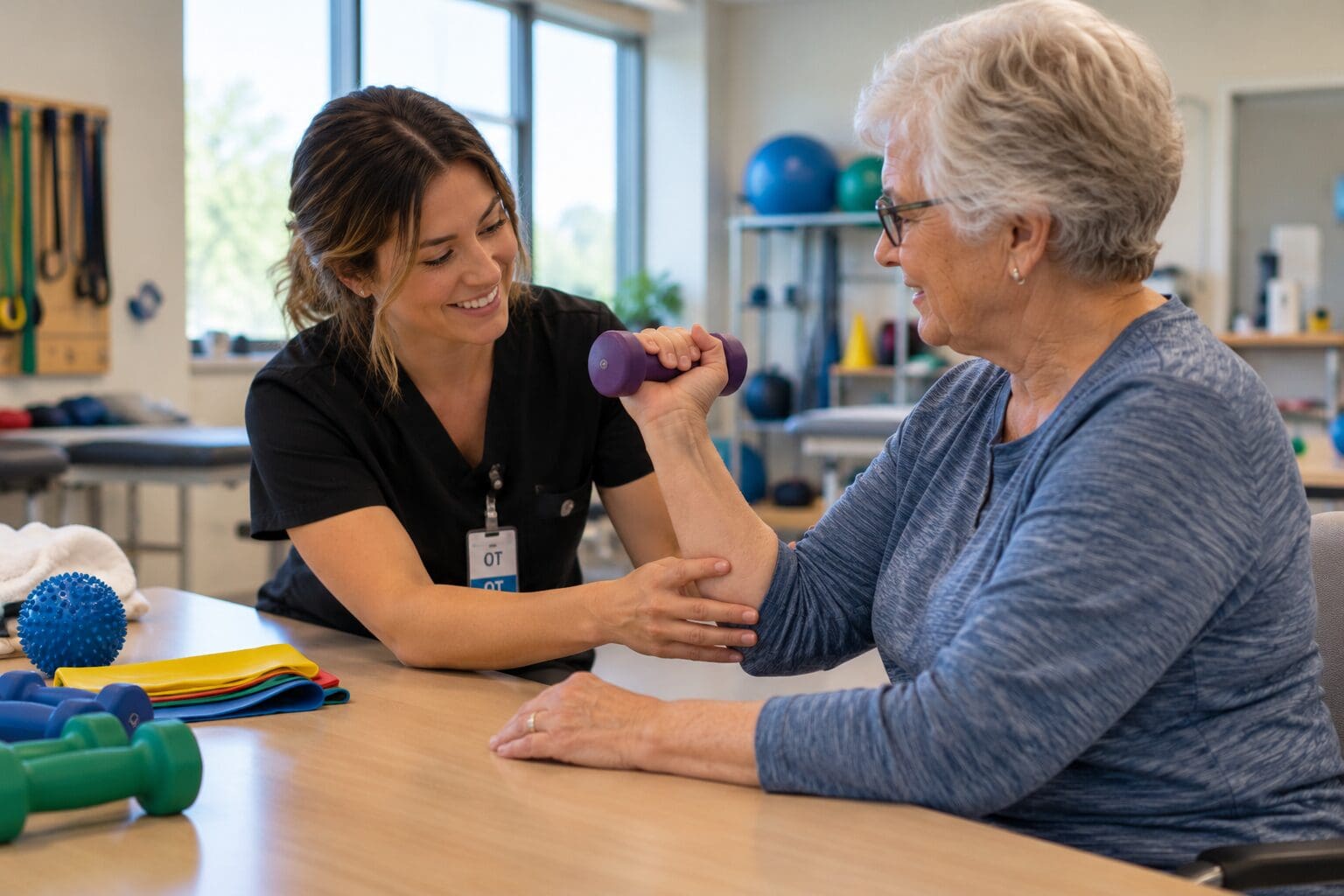
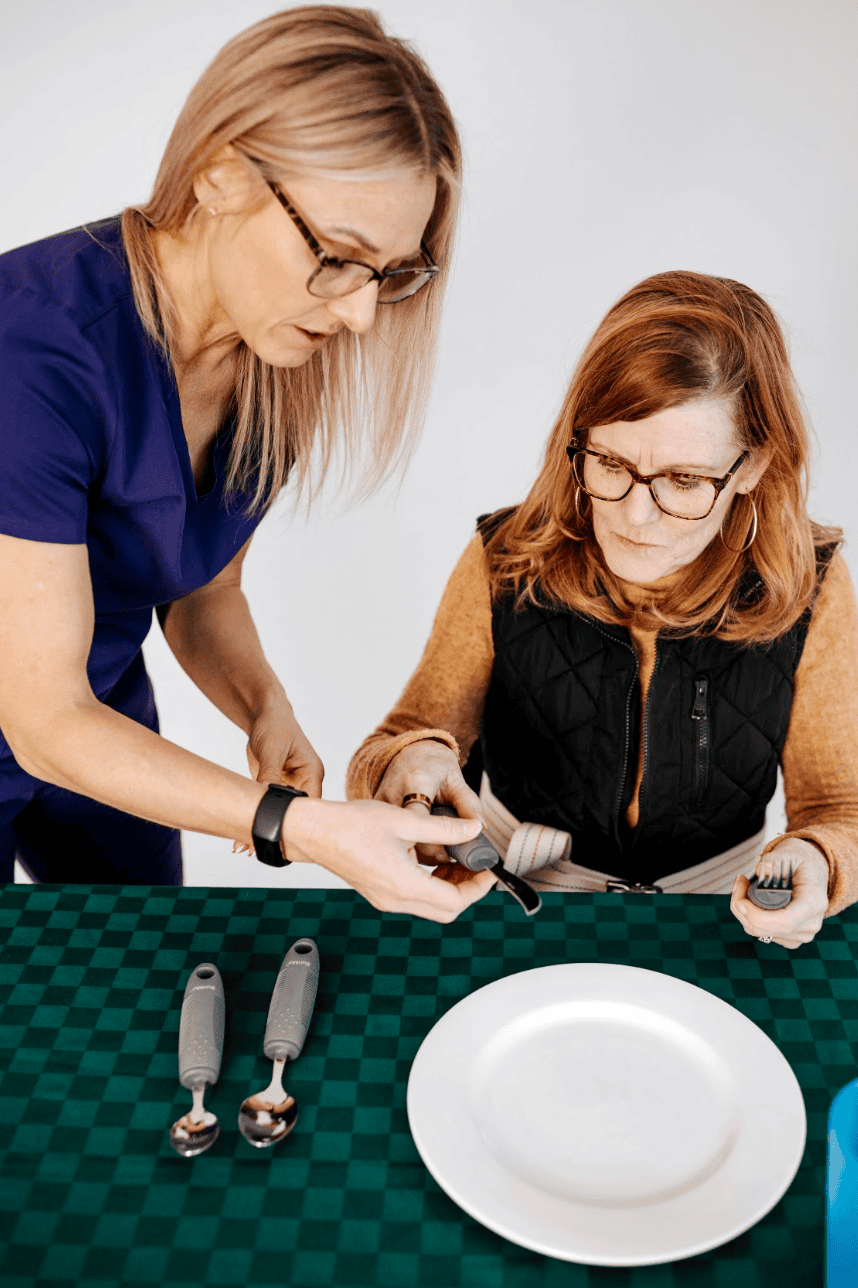
Occupational Therapy
Our OTs may address:
- Activities of daily living
- Fine motor skills
- Cognitive functioning
- Home safety
- Visual-perceptual skills
- Medication routines
- Community participation
- Independence
Social Work
Our social workers can help individuals and families navigate:
- Adjustment to life after stroke
- Caregiver challenges
- Resources
- Community support
- Emotional needs
- Practical barriers
Recovery Is Not a Straight Line
Some days may feel like major progress.
Other days may feel frustrating.
A person may regain one skill while discovering that another remains difficult.
That’s okay.
Recovery is highly individual.
The goal isn’t necessarily to recreate life exactly as it was before the stroke.
Sometimes rehabilitation means learning a new strategy.
Sometimes it means adapting the environment.
Sometimes it means finding a different way to complete a familiar activity.
And sometimes a small amount of independence represents an enormous milestone.
Don’t Forget the Person Behind the Stroke
A stroke changes someone’s abilities.
It doesn’t erase who they are.
They are still a parent.
A spouse.
A grandparent.
A friend.
A professional.
A person with interests, opinions, goals, humor, and dreams.
At iRehab Services we want rehabilitation to address the whole person—not just the diagnosis.
We offer services in-home, in our Sterling Heights clinic, in community settings, and through telehealth.
📞 248.252.6064
📧 marcia@irehabservices.com
Stroke recovery can be a long journey, but people don’t have to walk it alone.
Every skill regained matters. Every strategy learned matters. Every step forward matters.


leave a comment!
Comments