



Morning chaos and bedtime battles are two of the most common stress points for families, and they’re also two of the most powerful opportunities to build executive function (EF) skills.
Skills like planning, sequencing, time management, working memory, and emotional regulation are all embedded in daily routines. The good news is that you don’t need complicated interventions to strengthen them, just consistent, structured routines that kids can actually follow.
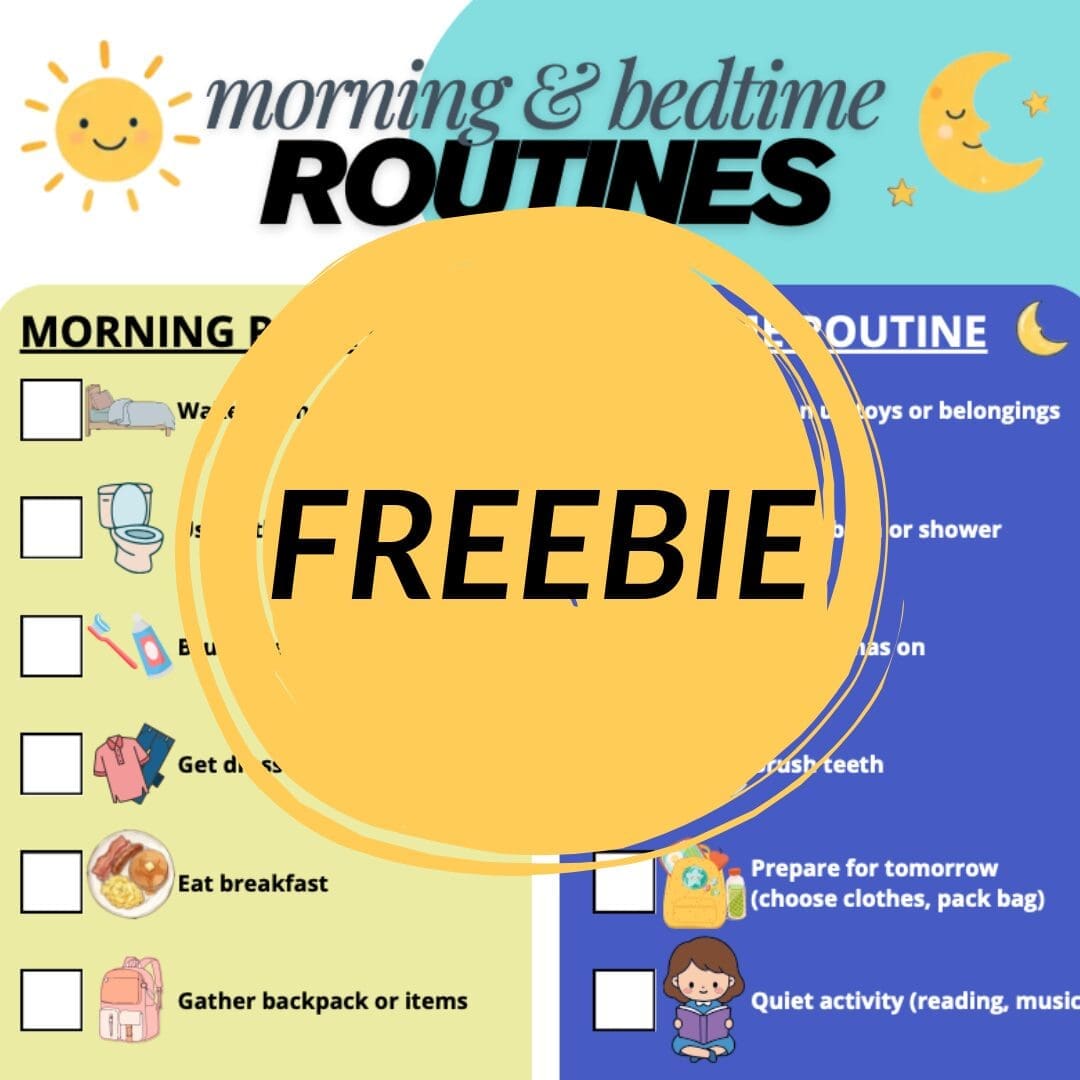
To make this easier, we’ve created a FREE printable Morning & Bedtime Routine Chart you can download and use at home.
Why Routines Build Executive Function Skills
Executive function skills are the brain’s “management system.” They help children:
- Start and finish tasks
- Follow multi-step directions
- Transition between activities
- Manage time
- Regulate emotions
Morning and bedtime routines naturally practice all of these skills every single day. When routines are predictable and visual, children begin to internalize structure and develop independence.
The Power of Visual Routine Charts
A visual routine chart supports executive function by:
- Reducing verbal reminders (which often become overwhelming for kids and caregivers)
- Supporting working memory (“What comes next?”)
- Encouraging independence and follow-through
- Making expectations clear and predictable
- Helping with transitions and emotional regulation
Over time, children shift from needing constant prompting to self-monitoring their routines.
Sample Morning Routine
A strong morning routine is simple, consistent, and visual:
- Wake up and get out of bed
- Use bathroom
- Brush teeth and wash face
- Get dressed
- Eat breakfast
- Pack backpack / gather items
- Check schedule or visual plan
- Leave for school or activity
Each step builds sequencing, initiation, and time awareness.
Sample Bedtime Routine
Bedtime routines are especially important for emotional regulation and cognitive shutdown skills:
- Clean up toys or belongings
- Bath or shower
- Pajamas on
- Brush teeth
- Choose clothes and pack for tomorrow (if appropriate)
- Quiet activity (reading, calming music, drawing)
- Settle into bed
- Lights out
Bedtime routines also support transitions, impulse control, and self-soothing skills.
Tips to Make Routines Actually Work
Even the best routine won’t help if it’s not realistic. Here’s what we recommend:
- Keep it short and consistent
- Use visual supports instead of repeated verbal reminders
- Break tasks into small, concrete steps
- Practice the routine when things are calm (not just during rush times)
- Reinforce independence, not perfection
- Allow extra time for transitions
Remember: the goal is progress, not perfection.
Why This Matters for Executive Function Development
When children practice routines daily, they are building:
- Task initiation
- Sequencing skills
- Time management awareness
- Working memory
- Emotional regulation
- Independence
These are foundational skills for school success, social development, and long-term independence.
Download Your Free Printable Routine Chart
To make implementation easier, we created a FREE printable Morning & Bedtime Routine Chart designed to support executive function development at home.
🎁 Use it to:
- Create structure and predictability
- Reduce morning and bedtime stress
- Build independence over time
- Support EF skill development in a natural way
👉 Download your free routine chart below
Need Extra Support?
If your child struggles with routines, transitions, or independence, it may be a sign of executive function challenges. Support is available.
At iRehab Services, we offer Executive Function Coaching to help children, teens, and adults build real-life skills for:
- Organization
- Time management
- Task follow-through
- Emotional regulation
- Daily independence
📞 Call 248-252-6064
📧 Email marcia@irehabservices.com
🌐 Visit iRehabServices.com









leave a comment!
Comments